

Previously: Part 1 || Part 2 || Part 3
If we think very hard about this quote again:
Because We have no Government armed with Power capable of contending with human Passions unbridled by morality and Religion. Avarice, Ambition, Revenge or Gallantry, would break the strongest Cords of our Constitution as a Whale goes through a Net. Our Constitution was made only for a moral and religious people. It is wholly inadequate to the government of any other.
—John Adams, letter to the Massachusetts state militia, October 11, 1798
We can see that it carries an implication that John Adams may not have fully realized or intended.
A society is not actually made of laws, or the governments that make them, or even the philosophy that motivates both.
A society is ultimately made up of people.
And any society is therefore defined by two sets of functions:
The governance function: how it is ordered, managed, and regulated.
The filter function: who is allowed to live in it and participate in it, and how a member of that society is defined.
When we discuss hypothetical societies, most of our attention is normally focused on designing and managing governance functions. But governance alone is not enough to produce an ideal society, or even a functioning one. The filter function is as important… if not more.
This is the Lesson of Liberia.
What’s Liberia?
Exactly.
No, really, what is Liberia?
Liberia (/laɪˈbɪəriə/ ⓘ), officially the Republic of Liberia, is a country on the West African coast … official language is English …
On July 26, 1847, the settlers issued a Declaration of Independence and promulgated a constitution. Based on the political principles of the United States Constitution, it established the independent Republic of Liberia.
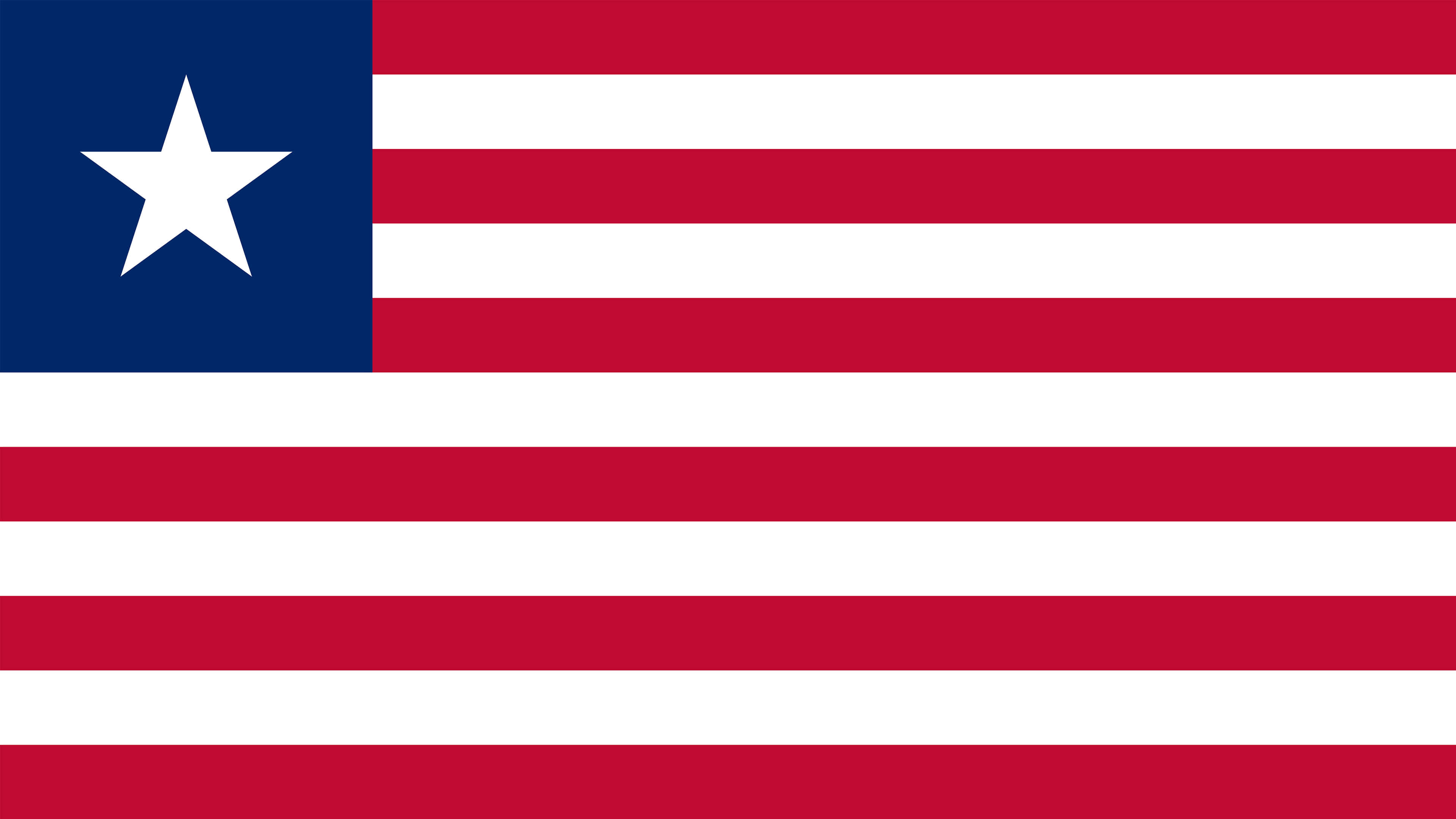
It’s an African nation, established by former slaves from the Americas. Modeled after the United States in every respect. How much so?
Well, the constitution is essentially a carbon copy, the capital is “Monrovia,” after James Monroe, and here’s the flag:
So what happened?
Well, it didn’t turn out quite as well as the United States….
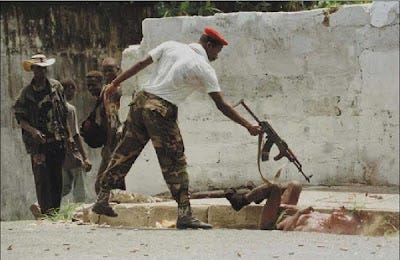
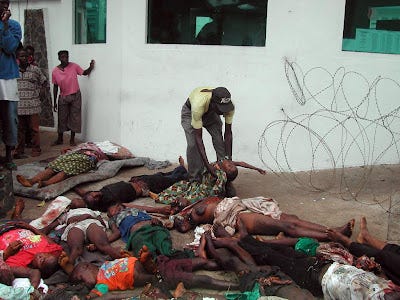
So it turns out that laws aren’t the only thing that matter. The character of a nation is the character of its people:
Liberia and Sierra Leone, located in West Africa, share the second-lowest average IQ score of 45.07. These countries have endured years of civil unrest, poverty, and inadequate infrastructure, which have undoubtedly impacted education and the overall development of their populations. Conflict-induced trauma, lack of access to education, and healthcare disparities are significant contributors to the low IQ scores observed in these nations.
Source: Business Day Nigeria
What we can conclude from the Lesson of Liberia is that America’s governance functions may have been contributory, or even necessary, for its success as a nation, but they were not sufficient.
Filter functions were required.
America’s filter functions were emergent, not deliberate, as we saw in the previous section. This is not unique to America. In fact, it’s not uncommon. Every blood-and-soil nation, which is pretty much what the world was composed of until the time of classical liberalism, was based on a filter function of genetics and culture.
However, nation with blood-and-soil filters have a weakness that classical liberal America did not. They are extremely limited in their ability to poach talent from other nations.
However, America’s filters, equally accidental, degraded over time, as the oceans became easier to cross, the wilderness more tame, and the population more accepting, often due to previous waves of immigration.
America is indeed a nation of immigrants and their descendants, and would not exist if America had accepted no one. But to accept anyone who shows up on a nation’s doorstep is to learn the Lesson of Liberia firsthand.
It is not necessarily the source of immigration which is important. High-IQ, high-agency, pro-social individuals willing to adopt the values of a new society can be found in any population. They cannot be found in equal portions, but they can be found. Similarly, undesirables can come from high-functioning societies and racial groups.
Just as gold can be filtered from seawater, but seawater is not gold, filtering by race or national origin might sometimes be contributory, but it is neither necessary nor sufficient.
And if blood-and-soil filters are incompatible with a multiracial society based on classical liberalism, and filters of circumstance can be demolished by technology, then perhaps to rely on accidental filters instead of explicit ones is just as dangerous as relying on accidental instead of explicit governance.
The Lesson of Liberia is that filter functions have more effect on the fate of a society than governance functions do.
So we turn for the next example to the only society ever to make its filters simple, organized, understandable, and explicit.
So that we can learn the Lesson of Rhodesia.
What’s Rhodesia?
Exactly.
Keep reading with a 7-day free trial
Subscribe to Devon’s Substack to keep reading this post and get 7 days of free access to the full post archives.